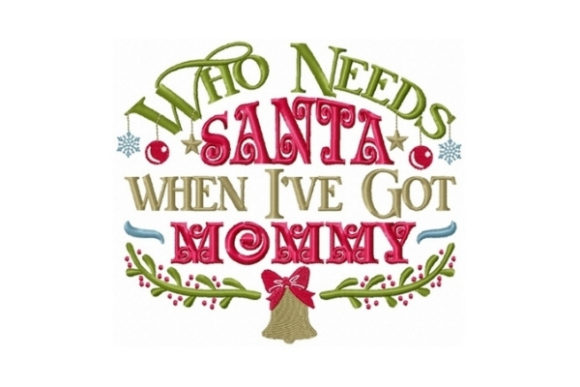
Who Needs Santa when I Got Mommy
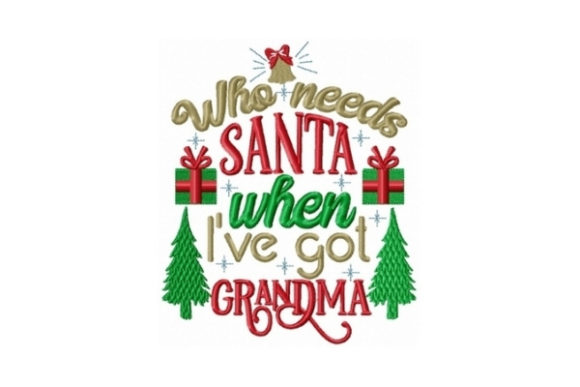
When I first previewed Who Needs Santa when I Got Mommy, I immediately recognized a design that walks the line between playful sentiment and marketable charm. The title alone signals a mother-focused Christmas message that feels fresh, personal, and distinct from generic holiday graphics. As an embroidery designer who has reviewed hundreds of machine embroidery designs for small business merch, I can tell you this piece has strong potential for branded product lines — but only if you approach it with the right production strategy. Let me walk through what I see from a professional standpoint and how this embroidery file can serve your small business merchandise, embroidered patch projects, and custom apparel needs.
First Impression: Friendly, Warm, and Audience Specific
The design delivers a joyful, handmade feel that suits family-oriented businesses, but its true strength lies in emotional targeting. Who Needs Santa when I Got Mommy speaks directly to mothers and children, making it ideal for local cafés, bakeries, florists, pet brands, boutiques, or creative studios that want to position themselves as nurturing and approachable. However, this is not a conservative or corporate design; it leans into playful, rustic, and decorative territory. If your brand identity centers on warmth, community, and a touch of humor, this embroidery file can reinforce that message effectively. For businesses aiming for sleek, modern, or minimalist branding, the same design may feel visually busy or too sentimental. Know your audience before committing to production.
Embroidered Patches and Branded Product Labels
This design works well as an embroidered patch for tote bags, aprons, or caps. The sentiment is self-contained and readable at a glance, which is essential for patch applications. When digitized properly, patch versions of Who Needs Santa when I Got Mommy can become signature brand identifiers for holiday markets, pop-ups, or limited-edition product drops. For handmade product labels, the design adds a personal, story-driven element that customers remember. I recommend testing it at a patch size between three and four inches wide to preserve legibility in the lettering while keeping the motif visually balanced.
Apron Embroidery and Staff Uniforms
For businesses like bakeries, coffee shops, or florists that use aprons as part of the uniform, this embroidery file can become a conversation starter. Placing it on the chest panel or upper left pocket area creates a natural focal point that customers see during service. The design fits especially well on lighter fabric colors where the thread contrast can pop without competing with dark background tones. If your apron fabric is textured — like twill or denim — be sure to use a medium-weight cutaway stabilizer to prevent distortion of the lettering.
Cap Embroidery and Curved Surfaces
Cap embroidery presents a unique challenge for designs with small text. The phrase Who Needs Santa when I Got Mommy includes multiple words that can become crowded on the curved surface of a structured cap front. I advise using a slightly larger hoop size and reducing the overall design width to fit within the cap's sewable area. Test the design on a sample cap first, and watch for letter compression on the outer curve. If the digitizing includes a center focus element, it may help anchor the layout and prevent the text from feeling scattered.
Tote Bag Design and Product Packaging Accents
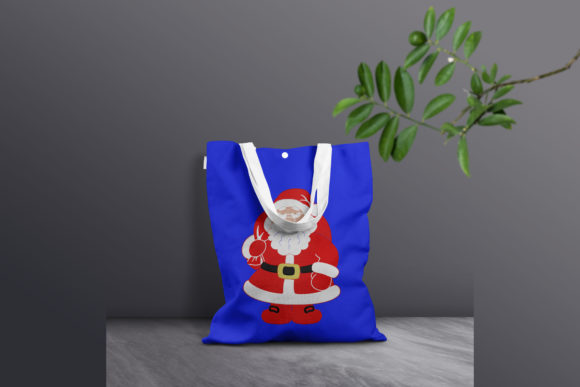
Tote bags remain one of the most popular carriers for small business merchandise, and this design translates well onto a medium to large tote face. Because tote bags are often made from canvas or cotton duck fabric, the stitch density needs to be moderate to avoid puckering. Who Needs Santa when I Got Mommy benefits from a well-spaced layout that lets the fabric breathe between satin columns. For product packaging accents — think hang tags, sticker inserts, or printable mockups — the design can be adapted to reinforce your visual consistency across physical and digital sales channels.
Small Patch Sizes and Tiny Lettering
The most common mistake I see with designs like this is scaling them down too aggressively for small patch sizes or sleeve details. When reduced below two and a half inches, the lettering in Who Needs Santa when I Got Mommy may lose sharpness, and fine details can blur into the background. If your application requires a tiny patch — for example, on a child's cap or a small accessory — request a simplified version of the embroidery file that removes nonessential elements and increases minimum stroke width. Always test the smallest planned size before committing to bulk production.
High Stitch Density and Fabric Texture
Dense designs can cause problems on lightweight fabrics like performance tees, delicate blouses, or thin knit caps. If the stitch count is high, the fabric may pucker, distort, or feel stiff after embroidery. I recommend checking the stitch density data for this embroidery file before hooping. On textured fabrics such as fleece, piqué, or heavy canvas, consider using a water-soluble topping to keep the thread from sinking into the weave. For dark uniforms, choose thread colors that create strong contrast — metallic gold, bright white, or vibrant red typically perform well against navy, black, or charcoal backgrounds.
Frequent Washing and Long-Term Wear
Items that need regular washing — like barista aprons, chef coats, or children's apparel — require careful stabilizer selection. A tearaway stabilizer may not provide enough support for repeated laundering cycles. Use a permanent cutaway stabilizer and trim closely to the design edge to prevent fraying. Who Needs Santa when I Got Mommy will hold up better on sturdy base fabrics with good recovery, such as cotton twill, denim, or performance polyester blends. If you are producing gifts or merchandise for customers, advise them on care instructions to preserve the embroidered finish.
Brand Identity, Customer Trust, and Visual Consistency
Using a design like this tells customers that your brand values personality and emotional connection. However, it also sets an expectation for consistency. If you apply Who Needs Santa when I Got Mommy to one product line — say, holiday aprons — but leave your caps and totes with generic logos, the brand identity may feel disjointed. I suggest building a cohesive collection around this design by repeating the same thread palette, placement location, and finish quality across all items. Customers notice when a brand invests in visual harmony, and that attention builds trust and perceived product value. For Etsy sellers and handmade brands, this design can become a signature piece that buyers associate with your shop's unique voice.
Practical Embroidery Designer Notes
- Test in black and white first: Before committing thread colors, run a monochrome sample to evaluate letter spacing, density, and overall readability. Black thread on white fabric reveals alignment issues that color can mask.
- Check if it works at small patch size: Hoop a scrap piece of your target fabric at the smallest intended dimension. Inspect the stitchout for broken letters, distorted curves, or skipped details.
- Review thread color contrast: The phrase Who Needs Santa when I Got Mommy needs separation between the text and any background elements. Light thread on light fabric or dark thread on dark fabric will reduce legibility at a distance.
- Inspect spacing and kerning: Look for tight spots between letters, especially in lowercase runs. If the digitizing program condensed certain letter pairs, request a file edit before production.
- Confirm hoop size and machine compatibility: This design may require a larger hoop than your standard setup. Measure your maximum sew area and compare it to the file dimensions before starting.
- Test on real fabric: Never rely solely on a digital preview. Stitch a sample on the exact fabric you plan to use for finished products.
- Use proper stabilizer: Match stabilizer type and weight to your fabric. A medium-weight cutaway works for most midweight woven fabrics; a heavyweight cutaway is better for stretchy or loosely woven textiles.
- Create a mockup for client approval: If you are producing for a client, generate a printable mockup showing the design on the actual product shape. This reduces revision requests and builds confidence in your process.
- Compare beside other design assets: Place the embroidered sample next to your existing branded items to verify that the visual tone, scale, and finish quality align.
- Confirm commercial licensing before business use: The description states the artwork is digitized under license granted by Creative Fabrica. Review the specific licensing terms for commercial production, reproduction limits, and resale rights. If you plan to sell finished products with this design, make sure your license covers that use case.
Final Thoughts on Using This Design for Your Small Business Merch
Who Needs Santa when I Got Mommy offers genuine potential as a branded patch, apparel accent, or product label for small businesses that want to connect with customers through humor and warmth. Its strongest applications are in holiday merchandise, staff uniforms for child-friendly venues, and limited-edition gift items. But success depends on thoughtful production planning: test thoroughly, choose the right fabric and stabilizer, and respect the limitations of small-scale embroidery. When executed well, this embroidery file can elevate your custom apparel and handmade product lines from ordinary to memorable. Treat it as a design asset that supports your brand identity rather than a standalone decoration, and your customers will respond to the care you invested in every finished piece.
Before you start production, run through the checklist I outlined above. A few extra hours of testing now can save you from disappointing stitchouts and inconsistent finished products later. Your small business merch deserves embroidery that looks professional, feels durable, and tells your story clearly — and with the right approach, Who Needs Santa when I Got Mommy can deliver exactly that.