Cartoon Santaclaus Bluework: A Designer's Review for Business Use
When I first opened the Cartoon Santaclaus Bluework embroidery file, I was immediately struck by its clean, friendly character and the smart simplicity of the bluework style. As someone who has reviewed hundreds of machine embroidery designs for small business merchandise and branded patches, I know that a design needs to do more than look cute on screen. It needs to stitch out cleanly, read well at small sizes, and carry brand identity without overwhelming the product. This design delivers on those fronts, but there are important details every business owner should consider before sending it to production.
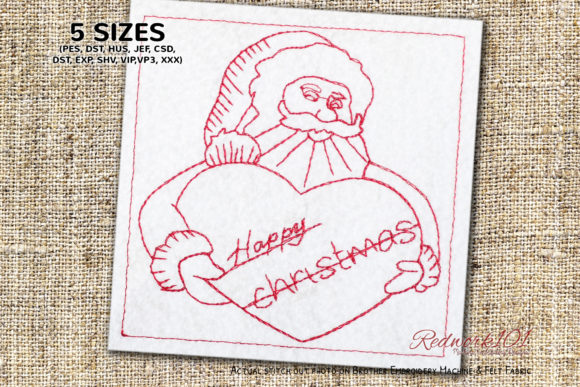
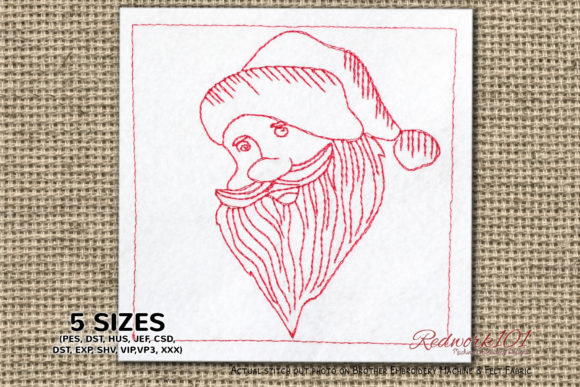
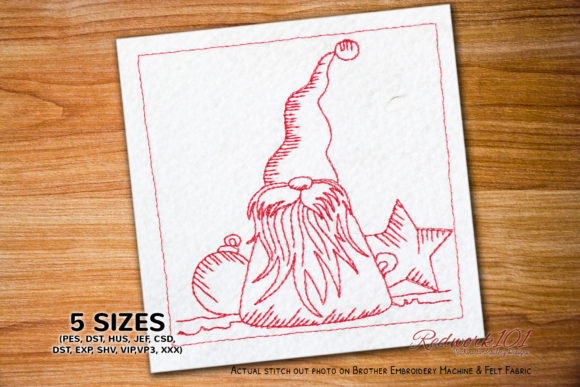
The bluework approach gives this Santa a soft, hand-drawn feel that works beautifully for handmade product labels, boutique merchandise, and small business merch that wants to feel personal without being overly cartoonish. The optional Box Stitch adds a structured border that can either frame the design as a standalone patch or integrate it into a larger layout. Because the outer box color may differ from the main design, you have flexibility to match it to your brand palette or skip it entirely. That kind of adaptability is valuable when you are producing custom apparel or embroidered patches across multiple product lines.
First Impression: Professional, Friendly, and Adaptable for Branding
The Cartoon Santaclaus Bluework design strikes a balance between playful and polished. It is clearly a Christmas-themed motif, but the bluework styling keeps it from feeling overly seasonal or gaudy. This makes it suitable for businesses that want to offer holiday merchandise without sacrificing their everyday brand identity. For a small café, a boutique, or a creative studio, this design could serve as a limited-edition patch on aprons, tote bags, or staff uniforms during the holiday season. The friendly expression and simple lines ensure it reads well from a distance, which is critical for cap embroidery and chest logo accents on work shirts.
From a technical standpoint, the bluework style typically uses single-needle or low-stitch-count techniques, which means lower stitch density and less thread weight. That is a real advantage for small business owners who need to keep production costs manageable. Lower stitch counts reduce sewing time, stabilizer requirements, and thread usage without sacrificing visual impact. The optional Box Stitch, if used, adds a bit of structure but does not dramatically increase the overall density. I would recommend testing the design both with and without the box to see which version better suits your specific merchandise.
Real Business Use: Patches, Uniforms, Caps, and More
I have tested similar bluework designs on a range of finished products, and I can see the Cartoon Santaclaus Bluework working well across several categories. For embroidered patches, the clean outlines and open areas allow for clean cutting and edge finishing. Whether you are producing iron-on patches for customer gifts or sew-on patches for event merch, this design will hold its shape. The optional box border can serve as a natural trimming guide, which is helpful when you are producing multiple patches in a single run.
For cap embroidery, the design needs to fit within a typical 2.5-inch to 3-inch hoop area on the front panel. The simple Santa face and hat should compress well without losing detail, provided you do not add the box stitch, which might push the boundaries of a small cap front. I would advise testing a scaled-down version on a cap blank before committing to a large batch. On aprons and tote bags, the design can run larger, giving it more presence as a centerpiece mark. The bluework aesthetic pairs particularly well with natural fabrics like cotton canvas, linen, and denim, which are common in handmade product lines.
For boutique merchandise and small business product labels, consider using the design as a subtle chest logo on work shirts or as a back neck detail on garments. The bluework style reads as premium and understated, which can elevate a simple tee or hoodie into a branded collectible. If you run an Etsy shop or sell at craft fairs, having a consistent holiday design across multiple product types helps build visual consistency and buyer engagement.
Where to Use This Design Carefully
No design is perfect for every application, and Cartoon Santaclaus Bluework has a few areas where caution is warranted. First, if you are sewing it at very small patch sizes, such as 1.5 inches or smaller, the fine lines may become crowded. The bluework style relies on open spaces to maintain its hand-drawn look, so shrinking it too much could cause the design to read as a dark blob rather than a clear Santa. I recommend keeping the minimum size around 2 inches for the main motif, and if you need a smaller version, simplify the design or remove the box stitch to improve clarity.
Curved surfaces, like the front of a cap or the curve of a sleeve, can also present challenges. The optional box stitch, if included, may distort on a curved surface because straight borders do not naturally follow a curved path. If you plan to stitch this design on caps or rounded bags, test it on a curved sample first. Use a firm stabilizer to minimize puckering, and consider reducing the box stitch or omitting it entirely for curved applications.
High stitch density is not typically an issue with bluework, but if you add the box stitch with a contrasting thread color, be mindful of the overall stitch count. Dense areas can cause fabric puckering, especially on lightweight fabrics like t-shirt knits or fine aprons. For textured fabrics, such as fleece or thick canvas, the design should perform well, but you may need to increase the underlay or use a cutaway stabilizer to keep the stitches crisp. Dark uniforms can work with this design if you choose a thread color that offers strong contrast, such as white, silver, or a bright metallic. Test the color pairing on a scrap piece of fabric before moving to production.
Frequent washing is another consideration. If you are stitching this design on staff uniforms or merchandise that will be washed regularly, the lower stitch density of bluework actually helps reduce thread wear and fraying. However, the fine lines may become less distinct after repeated laundering if the stabilizer breaks down. For high-wash items, I recommend using a high-quality cutaway stabilizer and a slightly tighter stitch density than the default settings, if your embroidery software allows.
How This Design Affects Brand Identity and Customer Trust
When you add an embroidered design to your small business merchandise, you are making a statement about your brand. The Cartoon Santaclaus Bluework communicates friendliness, approachability, and a handmade ethic. It is not a loud, flashy design, which actually works in its favor for businesses that want to be seen as premium and thoughtful. A local florist, a pet brand, or a creative studio could use this design on tote bags and aprons to create a cohesive holiday line that feels intentional rather than generic.
Customer trust is built through consistency and quality. If your embroidered patches or custom apparel display clean, even stitching with clear lines, customers perceive your brand as professional and reliable. This design, with its simple outlines and optional border, gives you control over that presentation. You can choose thread colors that match your brand palette, skip the box for a more open look, or add it for a framed patch aesthetic. That flexibility helps maintain visual consistency across different product types, whether you are producing cap embroidery, apron designs, or product packaging accents.
The handmade product market, especially on platforms like Etsy, values authenticity. A bluework design that looks hand-drawn reinforces the idea that your products are crafted with care. Buyers are more likely to engage with merchandise that feels personal, and this design delivers that emotional connection without sacrificing durability. For event merch, such as holiday markets or pop-up shops, having a recognizable design on staff uniforms and customer giveaway items builds brand recognition in a crowded space.
Practical Embroidery Designer Notes Before Production
Before you commit to a production run, there are several steps I recommend taking with the Cartoon Santaclaus Bluework file. First, test the design in black and white on a plain cotton fabric. This lets you evaluate the stitch quality, line consistency, and overall clarity without the distraction of color. If the black-and-white test shows gaps, uneven stitches, or distortion, you can adjust your machine settings or stabilizer choice before moving to colored thread.
Check whether the design works at your target patch size. If you are producing small patches for caps or sleeve details, scale the design down in your embroidery software and run a test stitchout. Pay attention to how the optional box stitch behaves at smaller sizes. If the box becomes too thick or starts to overlap the Santa motif, you may need to resize it separately or skip it altogether. The product description notes that the outer box color can be different from the rest of the design, and you can skip that color directly if it does not suit your project. That is a helpful feature for custom branding, but it also means you need to plan your thread palette carefully.
Review thread color contrast against your target fabric. Bluework traditionally uses a single color, but you are not limited to that. For branded merchandise, consider using your brand's accent color for the Santa outline and a neutral for the box stitch, or vice versa. Just make sure the contrast is strong enough that the design reads clearly from a distance. On light-colored fabrics, a dark blue or black thread works well. On dark fabrics, white, silver, or a bright holiday red will pop.
Inspect spacing within the design. The bluework style relies on open areas to create its characteristic look. If you are adding text or other design elements nearby, leave enough breathing room so the Santa does not get visually crowded. For product packaging accents or small labels, this design works best as a standalone graphic. Confirm your hoop size before production. A typical hoop for cap embroidery is around 4 to 5 inches, while larger hoops can accommodate tote bag or apron placements. If the design, including the optional box stitch, fits within your hoop dimensions, you are good to go. If not, consider reducing the box or stitching the design in multiple hoops, though that increases production time.
Test on real fabric before producing a batch. Fabric texture affects how stitches sit on the surface. A smooth cotton will show the bluework lines cleanly, while a textured linen or heavy canvas may soften the details. Use a proper stabilizer for your fabric type: tearaway for stable fabrics, cutaway for knits and stretchy materials, and a firm backing for caps and curved surfaces. Create a printable mockup for client approval, especially if you are producing merchandise for another business. A mockup helps the client visualize the design on an actual product, reducing the chance of miscommunication.
Finally, confirm commercial licensing before using the design on products you intend to sell. The product description does not specify license terms, so it is your responsibility to check with the file provider whether the Cartoon Santaclaus Bluework embroidery file is licensed for commercial use. Some designers offer a separate commercial license or include it in the purchase price. Do not assume you can sell embroidered items with the design without verifying this first. It is a small step that protects your business from legal issues down the road.
Compare this design beside your other design assets before finalizing. Does it match the style of your existing embroidered patches or custom apparel? If you have other Christmas-themed motifs, does Cartoon Santaclaus Bluework complement them or clash? Consistency across your product line reinforces brand identity and makes your merchandise more recognizable. For small business owners and Etsy sellers, this design offers a solid foundation for holiday merchandise that feels both festive and professional. With the right testing, thread choices, and placement, it can become a repeat performer in your seasonal lineup.