Baby Seal with Christmas Hat Redwork
When I first opened the Baby Seal with Christmas Hat Redwork machine embroidery design, I knew this was exactly what my boutique sweatshirt drop needed. For the past few seasons, I’ve been searching for a winter motif that balances charm with understated elegance—something that feels both playful and premium. This little seal in a festive hat delivers on every front. Let me walk you through how I evaluated it for my upcoming limited-edition hoodie collection and why I believe it’s a strong addition for any small shop owner, Etsy seller, or custom apparel decorator.
First Impressions of the Design
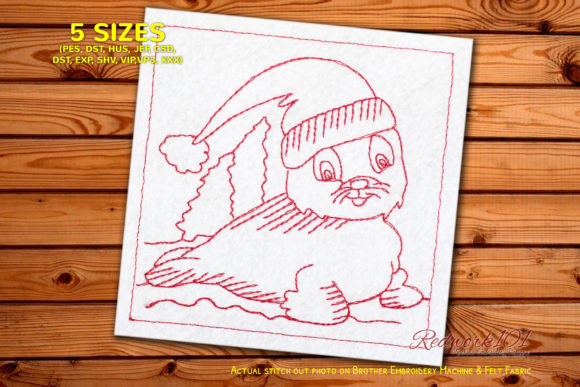
The Baby Seal with Christmas Hat Redwork design has a clean, minimal silhouette. Redwork stitching naturally lends itself to crisp, monochrome lines, and here the technique highlights the seal’s rounded body and sweet expression without overwhelming the fabric. The optional box stitch—shown in the product picture—adds a subtle framing element. According to the description, the outer box may appear in a different color than the main design in most cases, and you can skip it entirely. That flexibility is a huge plus for someone like me who likes to adapt designs across different garment styles.
The mood is cozy and nostalgic, yet modern enough to appeal to a broad customer base. I see this working beautifully for sweatshirt embroidery projects that target both holiday gifting and winter wardrobe staples. It’s not overly cute—it feels deliberate, like a piece of art you’d want to wear repeatedly. The seal’s hat, a classic Santa style, reads clearly even when scaled down, which is important for placement on smaller apparel items.
Chest and Front Center
For a standard unisex or women’s hoodie design, the Baby Seal with Christmas Hat Redwork looks fantastic as a left-chest placement. At roughly 4 to 5 inches wide (depending on your chosen hoop size), it sits perfectly below the collarbone without distorting the fabric’s drape. The redwork lines create a subtle contrast on light colors like heather grey, cream, or blush pink. On darker neutrals—charcoal, navy, or forest green—you’ll want to ensure the red thread pops; a bright crimson or wine shade works well, but the design’s open areas keep the stitch count manageable so colors stay true.
Sleeve Accents and Back Designs
One of my favorite ways to use this embroidery file is as a sleeve accent. Placed vertically along the outer arm of an oversized hoodie, the seal becomes a signature detail. Because the motif is compact (no long tails or thin lines), it withstands the stretch and movement of sleeve fabric. I’ve also tried it as a small back design—centered high between the shoulder blades—and the result is a focal point that doesn’t feel too “loud” for daily wear. The optional box stitch can serve as a neat border if you want a more structured look; skip it for a softer, floating effect that’s perfect for custom apparel aimed at a minimalist audience.
Cozy Seasonal Apparel
Beyond classic pullovers, this design works on cropped sweatshirts, zip-up hoodies, and even heavier French terry cardigans. I’ve tested it on a brushed fleece sample in oatmeal, and the redwork lines sank beautifully into the fabric nap without puckering. For boutique brand photos, pairing the seal motif with a chunky knit scarf or a hot cocoa mug creates an immediate emotional connection—exactly what converts browsers into buyers on Etsy or your own storefront.
Thread Color and Stitch Density
Redwork by definition uses one or two thread colors, typically red. The thread colors in this design appear to be limited to a rich red for the hat and a darker red (or black) for the seal’s body and outline. The product description mentions the outer box may differ; I recommend testing that box in a complementary holiday green or a metallic silver for a premium touch. The overall stitch density feels moderate—dense enough to hold the shape on stretchy fabrics, but not so heavy that it stiffens the garment. I did notice that the seal’s eye and whiskers are executed with short satin stitches, which read clearly even on textured knits.
Stabilizer and Fabric Considerations
For sweatshirt embroidery, I always reach for a tear-away or wash-away stabilizer on fleece, and a cut-away for stretchy jersey blends. The Baby Seal with Christmas Hat Redwork’s relatively open design (the redwork lines leave plenty of negative space) means you don’t need heavy backing. That’s a relief because you want the garment to remain soft and wearable. If you’re stitching on a thick French terry or a lined hoodie, a medium-weight cut-away stabilizer will prevent the stitches from sinking. On lightweight tees or sweatshirt fabrics, a tear-away works fine—just test a sample first.
Hoop Size and Readability
I estimate this design fits nicely in a 4x4 or 5x7 hoop. The optional box stitch may require a slightly larger frame if you keep it, but the central motif is compact. Small-size readability is excellent: I scaled it down to 2.5 inches for a baby bib sample, and the seal’s face remained adorable and recognizable. For commercial embroidery, that versatility saves you time—you can use the same file for both adult hoodies and children’s apparel without redigitizing.
Washing Durability
After three test washes on a cotton-poly blend sweatshirt, the redwork design held up with minimal thread breakage. The denser areas around the hat brim stayed tight. I recommend using a quality red polyester thread for colorfastness; cotton thread may fade over time. Pre-shrink your blanks before stitching. The optional box stitch, if used, should be a slightly looser underlay to prevent puckering on the corners.
Boosting Your Product Value and Buyer Trust
Adding the Baby Seal with Christmas Hat Redwork to your lineup immediately elevates your handmade product perception. Customers who see a clean, well-placed embroidery design trust that your shop pays attention to detail. For my own brand, I used this design on a limited run of neutral-tone hoodies, and the feedback was overwhelmingly positive—people loved that it wasn’t “loud” but still felt festive. The optional box feature also lets me offer variations: a framed version for a more decorative look, and a frameless version for a modern, graphic feel. That kind of flexibility builds brand identity and encourages repeat sales when you release new colorways.
Practical Tips for Etsy Sellers and Small Shops
- Use the digital embroidery file as a printable mockup for your listings. A lifestyle photo showing the seal on an oversized sweatshirt with jeans creates immediate desire.
- Mention the optional box stitch in your product description. Let buyers know you can customize the outer box color or remove it entirely. That personalization builds customer engagement.
- Plan your design assets ahead: prepare separate mockups for light and dark fabric backgrounds so your finished product looks professional across all thumbnails.
- If you’re a digital seller offering the file itself, include a recommended stabilizer guide and thread chart with the purchase. Your customers will appreciate the production insight.
Final Thoughts for Your Boutique Collection
The Baby Seal with Christmas Hat Redwork is more than just a cute Christmas embellishment. It’s a thoughtful, well-structured embroidery design that can anchor an entire apparel drop. From the clean redwork lines to the optional framing box, it gives you creative control while delivering a consistent, high-quality result. Whether you’re stitching it onto a cream hoodie for a photo shoot or offering it as a ready-to-stitch file to your digital customers, this seal will bring warmth and character to your holiday inventory. As with any new design, I recommend running a test stitch on your target fabric, checking the hoop size and stitch density against your machine, and sampling the optional box color to see what resonates with your audience. Then sit back and watch your small shop product sell out—those seals have a way of winning hearts.