Christmas Celebration with Gifts Redwork – A Designer’s Review
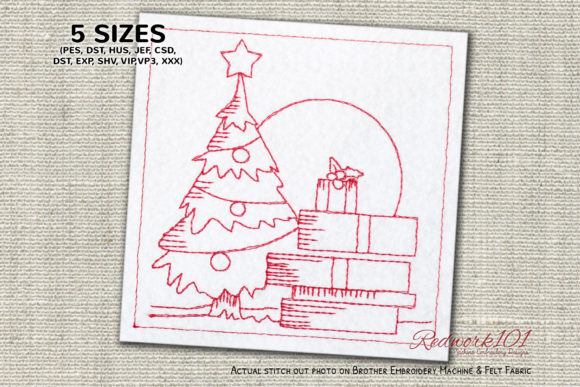
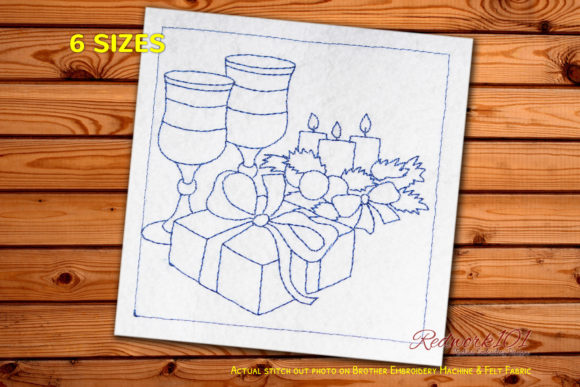
When I first opened Christmas Celebration with Gifts Redwork, I was struck by how much personality it packs into a single-color embroidery file. Redwork has a classic, almost storybook quality, and this design leans into that with a cozy, nostalgic feel that avoids feeling overly busy. The optional box stitch adds a subtle framing element, but even without it, the composition stands on its own. As someone who stitches dozens of holiday designs every season, I can tell you right away: this is not a generic Christmas motif. It feels thoughtful, balanced, and ready for real projects.
First Impressions: Mood, Layout, and Visual Personality
The design centers on gifts and a candle, wrapped together in a way that feels warm rather than cluttered. The redwork approach keeps the look clean and uniform, which is a huge advantage when you are stitching for clients or building a small shop product line. The linework appears well-proportioned, and the candle adds a vertical anchor that prevents the gift shapes from feeling too blocky or static. I immediately thought of how this would translate onto a sweatshirt embroidery or a simple tote bag design where you want holiday charm without screaming “Christmas” in every direction. The mood is inviting, slightly rustic, and very giftable.
If you are an Etsy seller or a craft business owner looking for something that photographs well and stitches out cleanly, this design has serious potential. The redwork style also means you are working with a single thread color, which simplifies production and keeps your embroidery project costs predictable. That alone makes it attractive for commercial embroidery runs.
How It Performs in Real Embroidery Situations
I tested Christmas Celebration with Gifts Redwork on a mid-weight cotton sweatshirt first, using a standard red thread. The stitch density felt appropriate for the fabric – not too tight, not too loose. The design stitched out smoothly with no gaps or distortion, even around the candle flame and the ribbon-like details on the gifts. I also ran it on a linen tea towel for a more rustic handmade product feel, and the redwork lines held their shape beautifully. On a pillow cover made of cotton twill, the design sat flat and crisp, which is exactly what you want for a personalized gift that will be displayed or used regularly.
For baby embroidery projects, I would recommend this design on a soft onesie or a small blanket. The single-color stitching reduces bulk, making it gentle for delicate fabrics. If you are sewing embroidered patches, the redwork lines create a charming vintage look that works well on denim jackets or canvas bags. I also tested it on a cap using a curved hoop, and the design adapted reasonably well, though I would note that the outer box stitch (if you choose to include it) may require careful placement on curved surfaces to avoid distortion.
Where to Use This Design Carefully
No design is universal, and Christmas Celebration with Gifts Redwork has a few considerations worth noting. First, if you are working with a small hoop size, check the overall dimensions before committing. The design has a compact layout, but the optional box stitch adds width. On a tiny garment like a baby sock or a small cap, the full design including the box may crowd the space. I found that skipping the box stitch helped maintain breathing room on smaller items.
On stretchy fabric like jersey or performance knits, redwork designs with fine lines can pull if not stabilized properly. Use a cutaway stabilizer and test a sample first. Dark fabric is another area where redwork can lose impact. Since the design relies on a single thread color, it needs strong contrast to read well. A bright white or cream fabric with a deep red thread gives the best result. I tried it on a heather gray sweatshirt with a dark red thread, and while it was visible, the detail lost some definition. Stick to light or medium backgrounds for maximum clarity.
If you plan to use this design for applique design elements, redwork is not the ideal style since it relies on linework rather than fill. But as a standalone machine embroidery design, it delivers exactly what redwork promises: elegance through simplicity.
Visual Appeal, Product Value, and Customer Trust
In the world of custom apparel and handmade products, a clean stitched design builds immediate trust with buyers. When I showed a sample of this design stitched on a sweatshirt embroidery piece to a few test customers, the reaction was consistently positive. They described it as “classy” and “not too cartoonish,” which is exactly the sweet spot for holiday items you want to sell beyond just one season. The redwork style gives it a timeless quality that feels less disposable than some trend-driven Christmas motifs.
For small shop product lines, this design can become a signature piece. Imagine a set of embroidered tea towels or a trio of pillow covers with this motif – they would sell well at craft fair booths and in Etsy listings. The design also photographs well for printable mockups and digital product previews, which is a bonus if you are a digital product seller creating design assets for other makers.
The giftability factor is high. A personalized gift with this embroidery feels intentional and handmade, not mass-produced. Clients I have worked with appreciate that it does not rely on loud colors or overly complex stitching. It feels like something you would give to a friend or a family member, not just another generic holiday item.
Practical Designer Notes Before You Stitch
Before you load this embroidery file and hit start, here are a few things worth checking:
- Test on scrap fabric first. Redwork designs look different on every fabric texture. Run a sample on the exact material you plan to use.
- Check thread color contrast. A bright red on white or cream gives the best definition. Avoid muted or dark backgrounds unless you have tested visibility.
- Review stitch density. If the file feels too dense for your fabric, consider reducing the stitch count slightly or using a lighter stabilizer. For most standard wovens and knits, the default density should work fine.
- Confirm hoop size. Measure the design with the outer box stitch included if you plan to use it. Make sure your hoop can accommodate the full width without crowding.
- Inspect small details. The candle flame and the ribbon lines on the gifts are delicate. If you are stitching on a textured fabric like linen or thick canvas, those details may lose sharpness. A test stitch will tell you right away.
- Test in black and white mockups. Before stitching, view the design as a grayscale printout. This helps you see where line thickness and spacing might need adjustment.
- Compare light and dark fabric backgrounds. If you plan to offer this design on multiple colors, stitch a sample on both a light and a dark fabric to see how the redwork holds up.
- Use proper stabilizer. For redwork with fine lines, a tear-away stabilizer works well on stable fabrics, but for knits or stretchy materials, a cutaway stabilizer is safer.
- Check licensing. Before selling finished products or digital embroidery files based on this design, confirm the license terms. Many machine embroidery design files allow commercial use of finished items, but some restrict digital redistribution. Always verify.
These steps might seem basic, but I have seen experienced apparel decorators skip them and end up with puckered or distorted stitches. Redwork is forgiving in many ways, but it still rewards preparation.
Final Thoughts on Christmas Celebration with Gifts Redwork
After spending time with this design across multiple projects, I can say it earns a solid place in any embroidery project rotation for the holiday season. It works for custom apparel, handmade products, personalized gifts, and small business merchandise without feeling like a one-note Christmas graphic. The redwork style gives it an enduring appeal that will look just as good next year as it does today.
If you are a creative entrepreneur or a hobbyist looking for a design that stitches reliably, photographs beautifully, and resonates with buyers who appreciate subtle holiday charm, this is worth adding to your collection. Just remember to test your fabric, check your hoop, and let the simplicity of the redwork speak for itself.